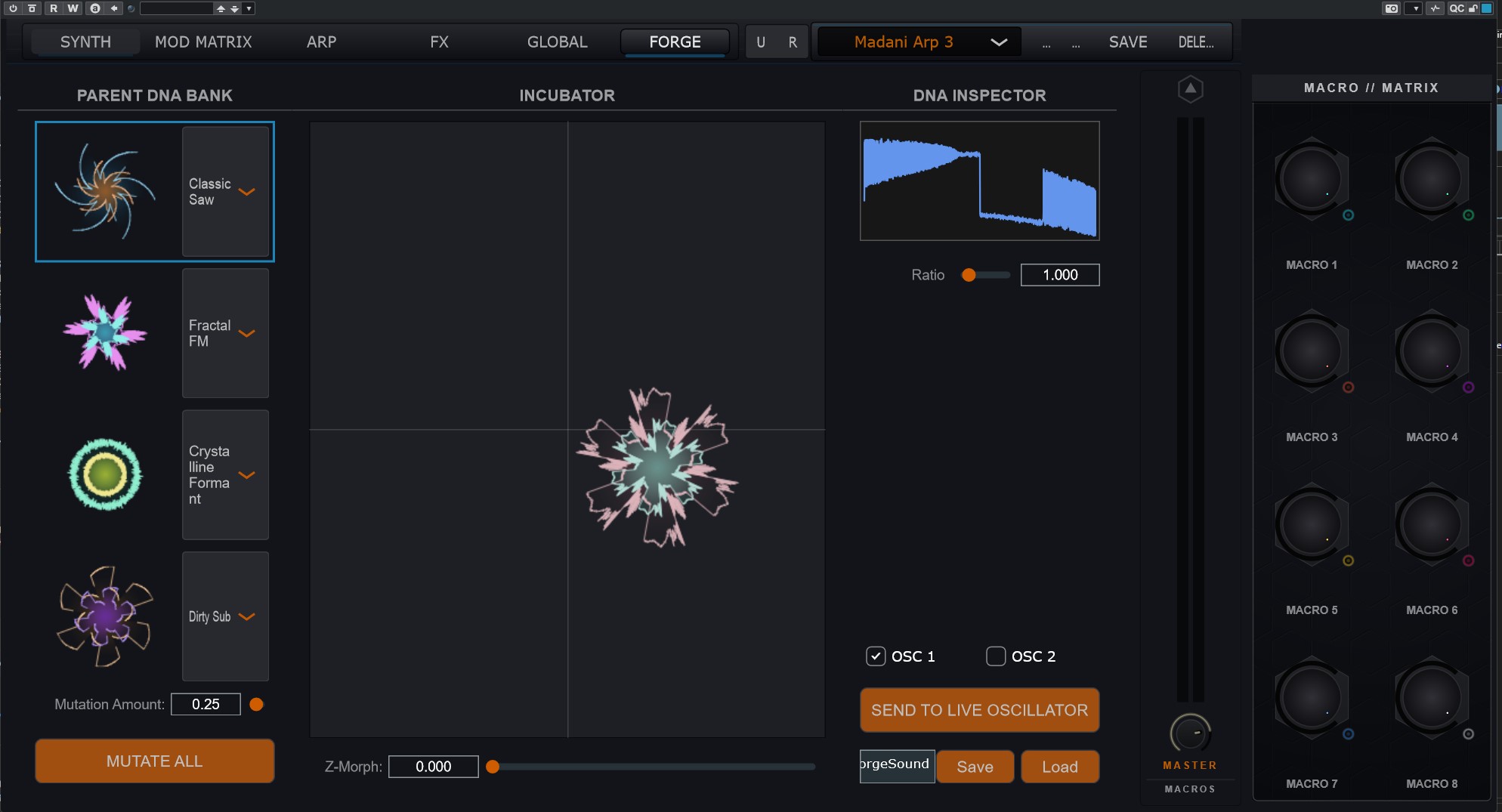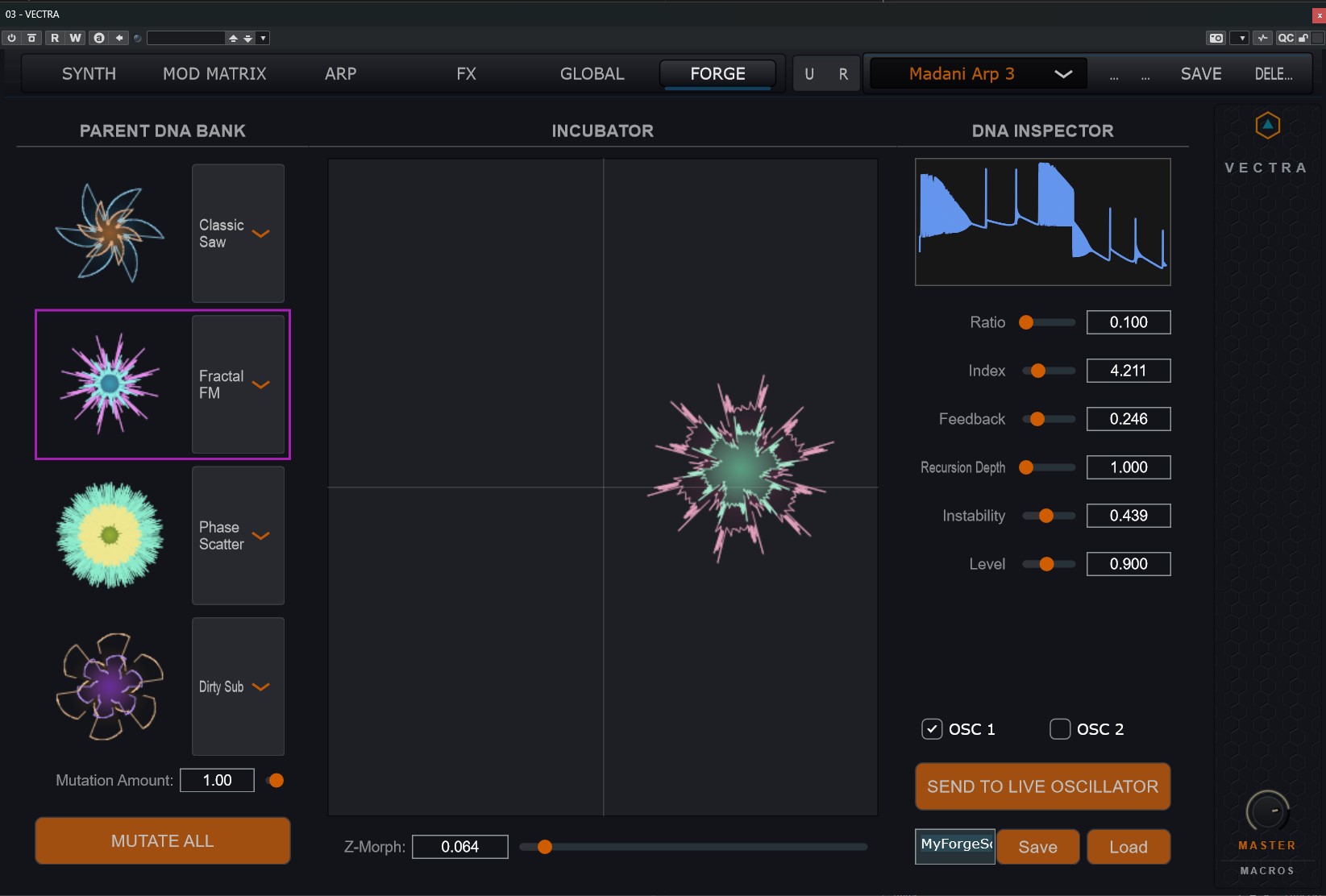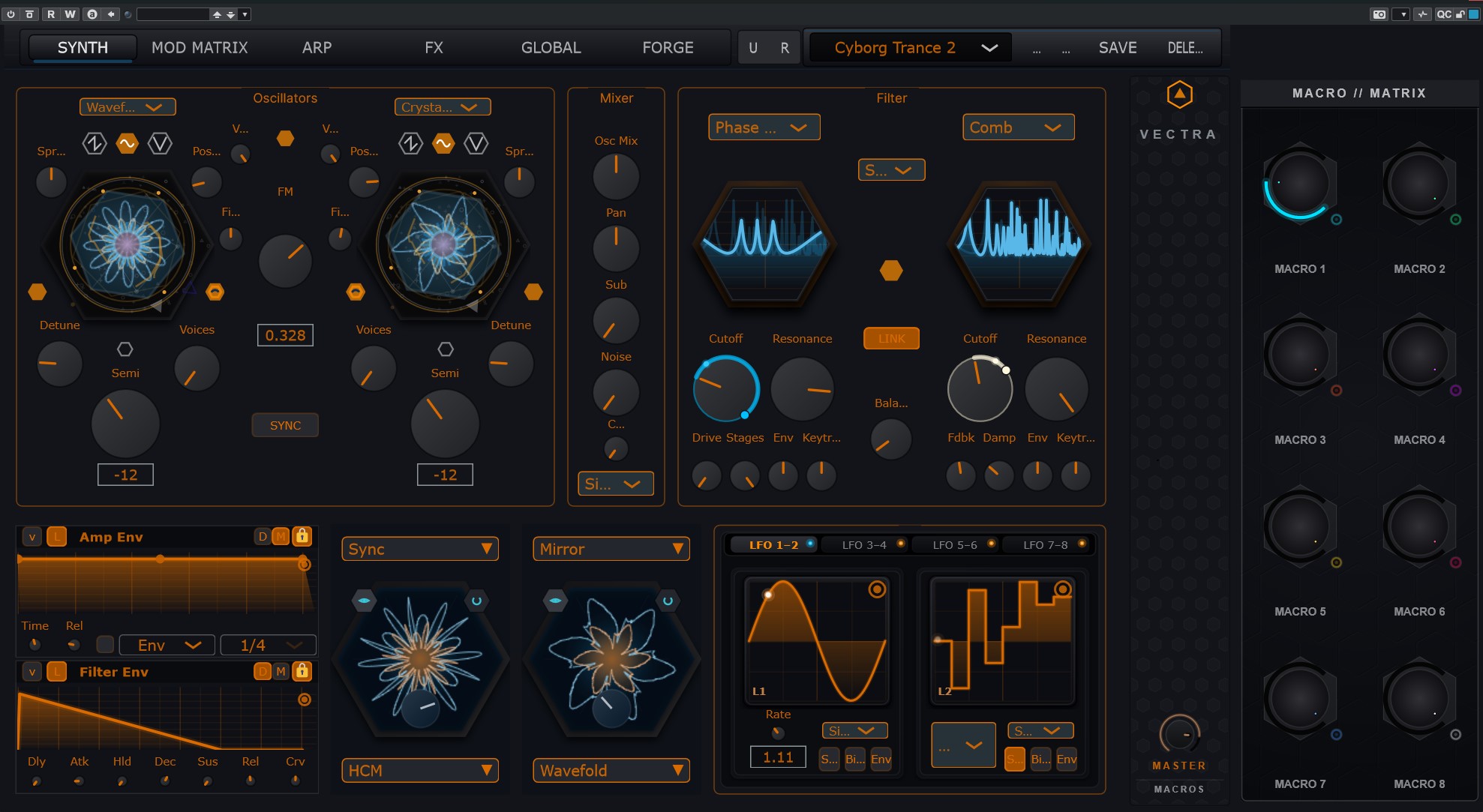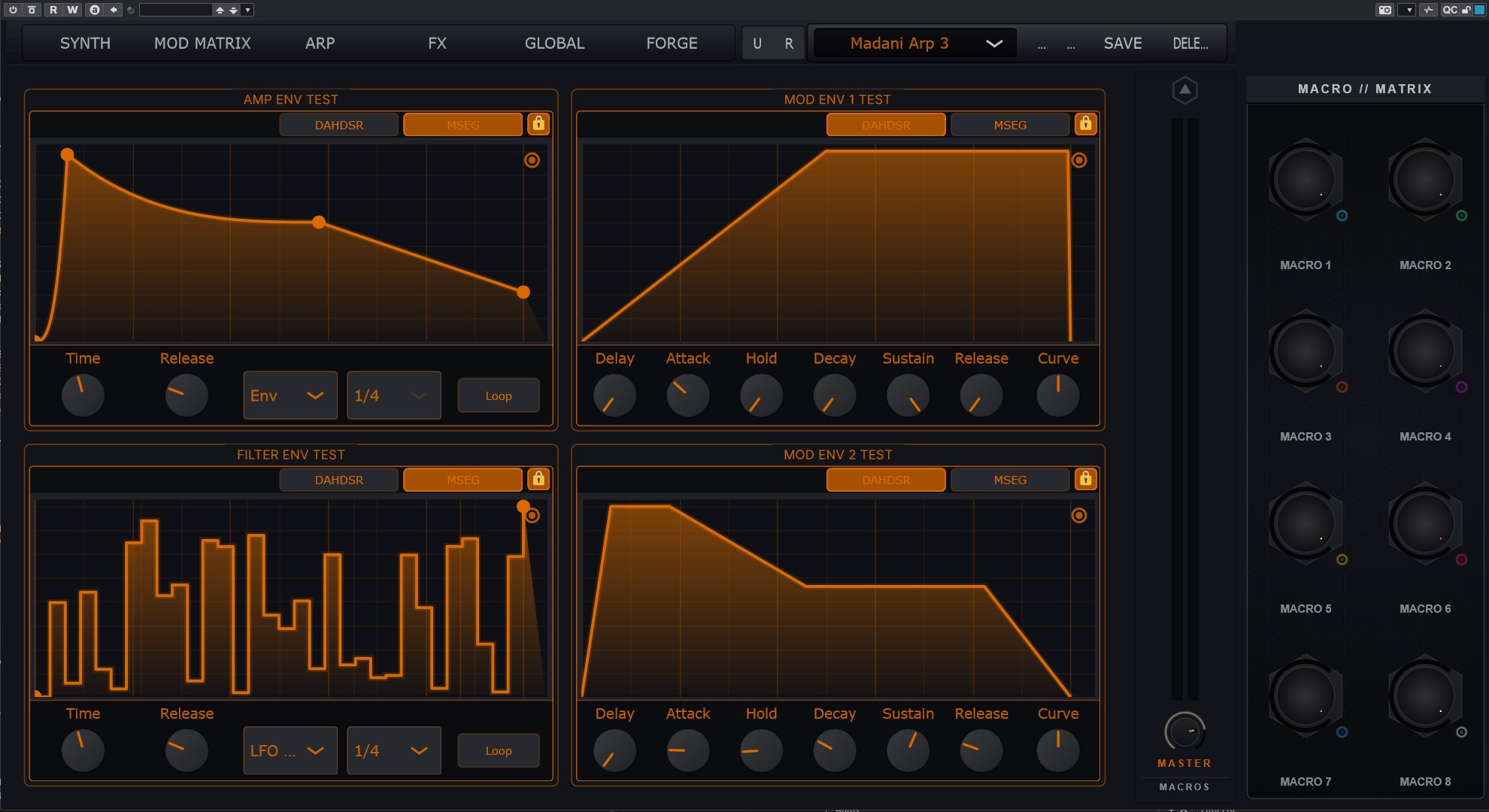
Vectra - GENESIS UPDATE: FLUX DNA MODE
AWC EVO now support LIVE MUTATION
After months of deep DSP engineering and intensive sound-design validation, we can finally say it plainly:
FLUX DNA is no longer a concept. It’s a working, playable reality.
Today we’re opening the doors for beta testers to explore the first release of our Advanced Parents—a new class of generative sound sources designed to reshape how you create wavetables, motion, and timbral identity inside VECTRA.
This post explains what FLUX DNA is, why it matters for modern production, and what you can expect from the first Advanced Parents—without exposing proprietary internals.
What is FLUX DNA?
Traditional wavetable synthesis gives you a choice:
start with a table and modulate it, or
resample audio and hope it behaves musically across pitch.
FLUX DNA is built around a different idea:
your sound is a living object with a stable “base reality” and an evolving “mutated reality,” and you can perform the transition between them in real time.
In practical terms, FLUX DNA enables:
background, non-blocking generation of new wavetable sets
musically controlled mutation rather than random mangling
real-time performance control via a single macro (Flux)
a workflow where changes feel like sound design, not “effects abuse”
The result: sounds that move like they’re alive—while staying playable and mix-ready.
Why producers should care
Most “advanced” synthesis features fall into one of two traps:
they sound impressive in a demo, but collapse under real-world playability
they sound usable, but don’t truly expand the palette
FLUX DNA was engineered to do both:
Immediate musical utility: usable basses, leads, pads, textures
A genuinely new sonic space: timbres that aren’t just filtered/distorted versions of the same waveform
This matters because modern genres—from psytrance and techno to cinematic and hyperpop—depend on motion and detail. FLUX DNA lets you build that motion at the source.
Introducing the first Advanced Parents (Beta)
If you’re new to VECTRA’s concept of “Parents,” think of them as high-level generative sound engines—not presets, not samples, and not static waveforms.
Advanced Parents are purpose-built to generate rich multi-frame wavetables with:
coherent timbre across pitch
meaningful motion across scanning
strong identity that survives processing and layering
What makes an “Advanced Parent” different?
A conventional oscillator gives you a waveform and a few shaping tools.
An Advanced Parent gives you a complete timbral organism: structure, motion, and spectral personality—ready to be played, automated, and pushed through your production chain.
These Parents are the foundation that FLUX DNA mutates and evolves.
The sound-design workflow: fast, deep, performable
Here’s the core creative loop beta users are now experiencing:
Generate a strong base sound with an Advanced Parent
Mutate the sound’s underlying spectral identity using FLUX DNA
Perform the transition between base and mutated reality using the Flux macro
Animate with scanning/modulation for evolving movement
Resample or commit when you’ve found “the one”
This is the kind of workflow you normally only get by stacking complex resynthesis tools, offline rendering, and a lot of trial-and-error. In VECTRA, it becomes immediate.
What’s available to beta testers right now
Beta testers are receiving the first wave of Advanced Parents and FLUX DNA features with:
a stability-first engineering foundation
a focus on musical outcomes rather than “randomness as a feature”
careful attention to: pitch integrity, motion coherence, and CPU safety
You’ll hear this immediately in how the sounds behave under:
wide pitch ranges
fast automation
heavy processing (distortion, reverb, granular layers)
polyphony and unison stacks
What FLUX DNA is not (and why that’s good)
To be clear, FLUX DNA is not:
a “one-click magic preset generator”
a gimmicky randomize button
a black-box AI effect that breaks musical intention
It’s a sound design instrument.
The goal is creative control, not chaos—unless you deliberately push it there.
What’s next
The beta release is the beginning, not the peak. Over the next iterations, we’ll be:
expanding the Advanced Parent library
improving discoverability with curated macro behaviors
refining the mutation response for even more “instrument-like” outcomes
adding more creator-focused educational content (patch breakdowns, production examples)
If you’re building modern electronic music and you care about timbral identity, FLUX DNA is the new frontier—because it makes advanced wavetable creation feel fast, playable, and inspiring.
Want in?
If you want early access and the ability to influence the direction of these instruments, join the VECTRA beta through Audionerdz.net.
You’ll get:
access to the first Advanced Parents
early FLUX DNA builds
the chance to shape the future feature set through feedback
SEO keywords (naturally targeted in this article)
FLUX DNA, wavetable synthesis, generative wavetable, spectral mutation, resynthesis, advanced oscillator, sound design workflow, Native Instruments style synthesis, modern electronic music production tools, beta synthesizer, VST wavetable synth, evolving textures.
Join the VECTRA Beta