
AUDIONERDZ EDITORIAL
After the Silence: What the 2026 O.Z.O.R.A. Tragedy Means for Psytrance Culture and Festival Infrastructure
By Audionerdz Editorial Board | Culture, Sound Systems & Industry Analysis
The sudden silence that fell over the Dádpuszta valley at midnight on August 2, 2026, was unlike anything the psytrance community had experienced in its thirty-year history. For the first time, Europe’s premier transformational gathering did not end with a sunrise set or a euphoric main stage breakdown. It ended in total silence, mandated by organizers following a harrowing week marked by extreme heat, a knife attack, and two fatalities within hours of each other.
As thousands of festivalgoers packed up their tents in the dark, a sobering reality settled over the underground electronic music world: the scale of modern outdoor gatherings has fundamentally outgrown the safety frameworks built for the culture.
A Week of Escalating Crises
The 2026 edition was beset by challenges almost from the opening day. Record-breaking European heatwaves pushed ambient temperatures in Hungary past $40^\circ\text{C}$ ($104^\circ\text{F}$), turning the dusty amphitheaters and open-air dancefloors into endurance tests.
Tensions mounted early in the week on Tuesday, July 28, when an altercation between attendees escalated into a severe stabbing incident. While quick action by on-site medical staff stabilized the victim, the violence sent shockwaves through a scene that historically pride itself on sanctuary, trust, and psychological safety.
The crisis reached its breaking point on Saturday, August 1:
-
Extreme Climate Strain: A 39-year-old attendee suffered fatal cardiac arrest amidst peak daylight temperatures, despite emergency resuscitation efforts.
-
Main Stage Tragedy: Hours later, a 45-year-old American attendee fell to his death from a prominent decorative stage installation—an act authorities subsequently identified as intentional self-harm.
Faced with an unprecedented combination of extreme weather, violent friction, and loss of life, festival leadership made the difficult but necessary decision to pull the plug on all sound systems early, forcing a immediate transition from celebration to mourning.
The Infrastructure Breakdown: Density, Decor, and Sound
For audio engineers, stage designers, and festival producers, the 2026 incident highlights critical structural issues that extend far beyond music programming.
“Autonomous culture cannot exist without basic physical protection. When extreme heat meets massive crowd density, standard site logistics are no longer enough.”
1. The Dancefloor “Living Room” Problem
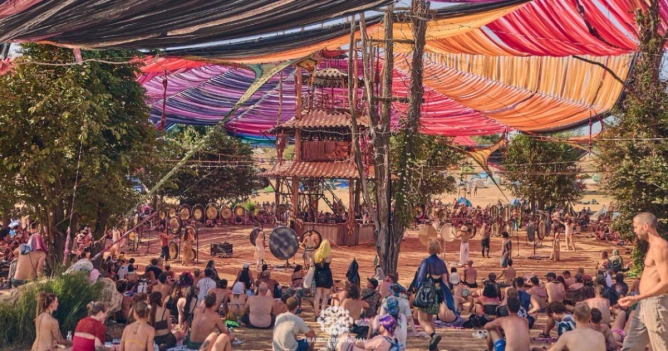
In recent years, the culture around major psytrance dancefloors has shifted. Once open spaces reserved for dance and movement, main stages have increasingly seen sprawling “camp setups”—pop-up canopies, armchairs, and private shade structures erected directly in dense crowd zones. At Ozora 2026, these obstructions crippled crowd flow, delayed medical responder foot-patrols, and heightened spatial friction among stressed attendees.
2. Stage Art vs. Physical Hazards
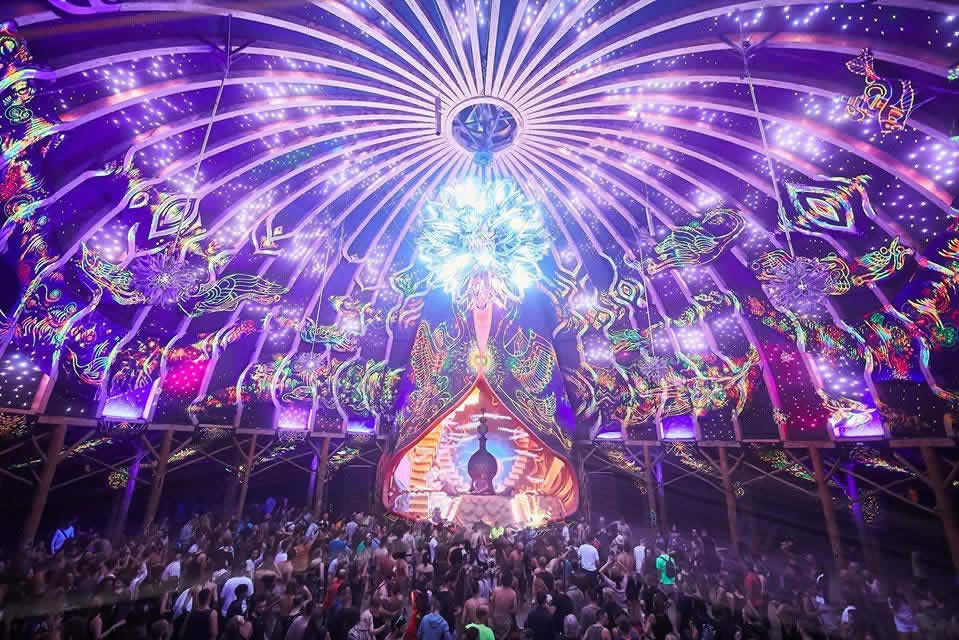
Psytrance architecture is world-renowned for its surreal, multi-story woven canopies and geometric climbing art. However, when attendees suffer acute psychedelic distress or severe mental health breaks, high-altitude decorative frameworks without physical barriers become lethal hazards. Future stage production must reconcile artistic ambition with structural fall-prevention engineering.
3. Climate Realities for High-SPL Stages
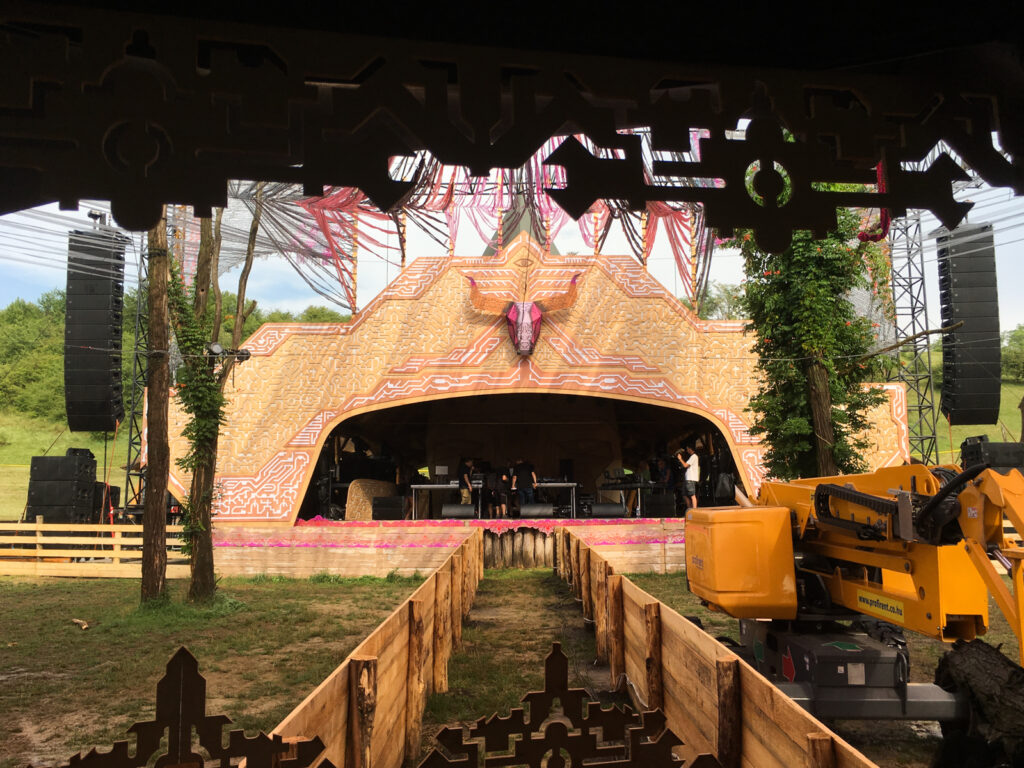
Running high-power function-one or custom point-source stacks in $40^\circ\text{C}$ heat doesn’t just stress power generators and amplifiers—it creates micro-climates on dancefloors where crowd heat index values exceed safe biological limits. Without mandatory shaded misting corridors and active crowd cooling, continuous 24-hour music programming in mid-summer is becoming unsustainable.
Where Does the Underground Go From Here?
The events at O.Z.O.R.A. 2026 have split the global community into a crucial debate:
-
The Illusion of Total Autonomy: For decades, the psytrance scene operated on a philosophy of radical self-reliance and minimal policing. Yet, as gatherings swell past 30,000 international visitors, treating a massive city-sized event as a informal gathering leaves vulnerable people exposed to violence, bad actors, and unmanaged medical crises.
-
The Call for Professional Harm Reduction: Moving forward, “psycare” can no longer be limited to static, quiet sanctuary tents on the periphery. Modern festivals require active, trained harm-reduction rovers embedded directly within crowds, working alongside professional medical teams equipped for acute trauma.
The Path Forward
The 2026 tragedy is a definitive turning point for underground festival culture. If gatherings like O.Z.O.R.A., Boom, and ZNA are to survive, producers must realize that true radical hospitality requires rigorous safety, strict dancefloor management, and unyielding protection for every human who enters the valley.
The music will eventually return to the hills of Dádpuszta. But the lessons of August 2026 must never be forgotten.